
Design GuidesSeptember 7, 2026 · 4 min read
How to Choose an Architect in Surat: A Practical Guide
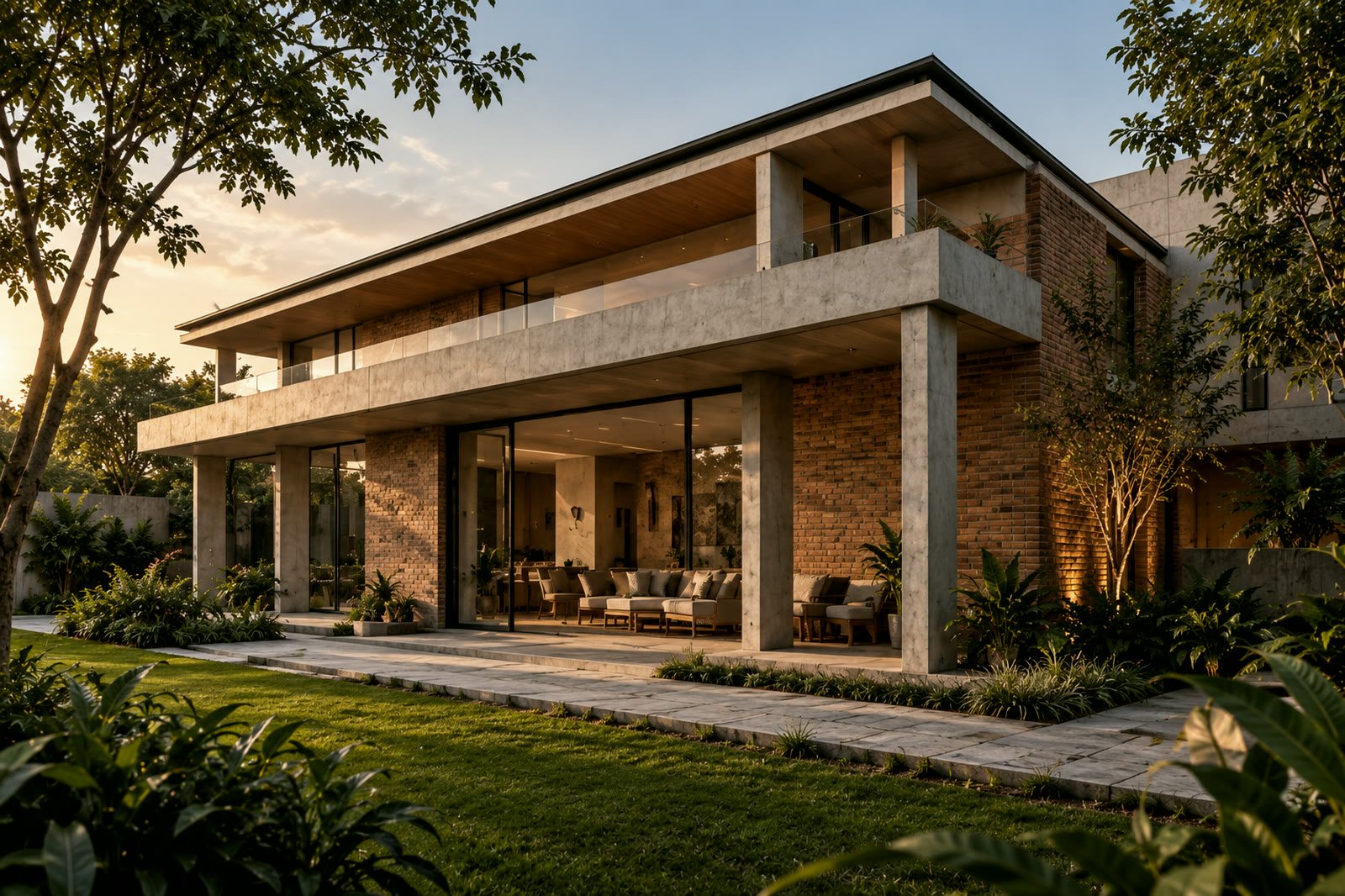
Choosing an architect is one of the first and most consequential decisions in any building project. The right practice saves you money, time and stress; the wrong one can cost you all three. This guide covers how to shortlist, interview and appoint an architect in Surat — what to look for, what to ask, and what a fair fee and process look like.
Start with a clear brief and a real budget
Before you contact anyone, write down what you want to build, the plot details (size, location, orientation, any development-control constraints you know of), how you will use the spaces, when you want to start, and the budget you can actually commit — including a 10–15% contingency. An architect can only respond to what you tell them. A vague brief produces a vague proposal.
Look for the right kind of experience
Portfolio fit matters more than portfolio size. If you are building a home, look for residential work; for an office or showroom, look for commercial projects. Beyond style, check for:
- Qualifications — a registered architect for anything that needs sanctioned drawings.
- Engineering capability — structural and services coordination, in-house or through trusted consultants. In Surat’s climate, getting the envelope, shading and ventilation right is an engineering question as much as an aesthetic one.
- Local knowledge — familiarity with Surat’s development-control rules, plot sizes, soil conditions and the contractor market.
- Communication — you will work with this person for a year or more. Do they listen? Do they explain trade-offs clearly?
Questions to ask at the first meeting
- Who will actually run my project day to day?
- Can I speak to two past clients with similar projects?
- How do you handle changes to the design once we have started?
- What happens if construction costs come in over budget?
- How do you coordinate with the structural engineer and contractor?
- What is included in your fee, and what is charged separately — surveys, 3D views, municipal liaison, site visits?
Understanding architect fees
Fees are usually a percentage of construction cost, or a fixed fee agreed against a defined scope. Either is fine — what matters is that the scope, the payment stages and the exclusions are written down before you start. Be wary of a fee far below the market: the work still has to be done, and it tends to reappear later as thin drawings, slow responses or scope disputes. Payment stages normally track the work: concept, developed design, working drawings and tender, and construction support.
The design process, step by step
- Discover — brief, site study, budget, regulations.
- Concept — options tested in sketch and model.
- Design development — the chosen scheme resolved: form, light, materials, structure.
- Working drawings and tender — documentation detailed enough to price and build.
- Construction support — site visits, queries answered, quality checked to completion.
Ask a prospective architect to describe their process in these terms. If they cannot, that is a signal. You can read how we approach it on our Architecture Design and Residential Architecture pages.
Local factors that matter in Surat
- Climate — long hot summers and a humid monsoon. Deep verandahs, shaded openings, cross-ventilation, light surfaces and thermal mass all reduce running costs.
- Regulations — Surat’s development-control rules govern setbacks, FSI, height and parking. Your architect should raise these at the first meeting, not the last.
- Materials — exposed concrete, local brick and stone weather well here and keep maintenance low.
- Contractors — an architect who knows reliable local contractors and can administer the build protects your budget on site.
Red flags
- No written proposal or fee agreement.
- Reluctance to share references.
- One person promising to do everything, with no team or consultants.
- A design produced before they have understood your brief or seen the site.
- Pressure to sign quickly.
Next steps
Shortlist two or three practices whose work fits your project. Meet each, ask the questions above, and read their proposals side by side — not just on price, but on scope, process and how well they understood what you want to build. You can see how we work across selected projects, or read more about architecture and interior design in Surat.
Mark7 Architects is an architecture and interior design studio in Surat working across residential, commercial and interior projects. If you are planning something, tell us about your project.
Frequently asked questions
How long does the design stage take? For a typical home, usually 6–12 weeks to a developed design; longer for complex or larger projects.
Do I need an architect for a small project? For interiors or minor work, an interior designer may be enough. For anything structural, or anything that needs municipal sanction, use a registered architect.
Can the architect also manage construction? Many do, as a separate service. It is worth having: coordinated site administration is where budgets are usually won or lost.
Related reading: Architect or interior designer? · What affects interior design cost
Office Interior Design in Surat: A Practical Planning Checklist
Planning an office or showroom fit-out in Surat? A step-by-step checklist covering space planning, lighting, services, budget and…
Interior Design Cost in Surat: What You Pay For and How to Plan Your Budget
What drives the cost of interior design in Surat, how designers charge, what is usually included or excluded,…
Architect or Interior Designer? Who You Need for Your Project in Surat
What an architect does, what an interior designer does, where they overlap, and how to decide who to…